
Will AI Affect Your Role? Three Structural Moves That Protect Your Position
The people who lose out in the next decade will not be those lacking technical skills. They will be those who failed to restructure their position before the window closed.

If you have spent any time reading the news lately, you have probably felt that familiar, heavy knot in your stomach.
The headlines are relentless. They tell us that artificial intelligence is coming for our livelihoods. We hear about massive tech layoffs, algorithms passing exams, and software that can write complex strategies in roughly fourteen seconds. If you are an earner who has spent the last decade working incredibly hard to build a comfortable life, a solid household baseline, and a secure environment for your family, this sudden shift feels terrifying.
It is easy to feel like you might wake up in five years, look around, and realize that your hard-earned leverage has suddenly become obsolete.
But let us take a collective deep breath and step away from the doomscrolling for a minute. Let us talk about the actual reality of the AI revolution. Not the science fiction version, but what is actually happening beneath the surface of the global economy right now.
Here is the most important truth you will hear about this transition. AI is not just a software update. It is a massive reallocation of global resources. The people who lose out in the next decade won't be the ones who don't know how to code. The losers will be the ones who refuse to adapt their strategies, both in how they work and how they position what they have already earned. If you want to build an absolute fortress around your career and your family's future in an AI-driven economy, these are the three shifts you need to make immediately.
1. Master the Human Premium
Artificial intelligence is historically unprecedented at giving us fast answers. If you need a summary of a 400-page report, an AI can give it to you in seconds. If you need a list of ten ways to optimise a supply chain, a model can spit that out faster than you can type the prompt.
But here is what AI is terrible at: asking the right questions and understanding human nuance.
AI operates in a vacuum. It doesn't know the specific, messy context of your company or your clients. It doesn't know that your industry is currently risk-averse, or that a key stakeholder is highly sensitive to pricing changes right now. As AI takes over the grunt work of generating data and pulling reports, the value of a human shifts from creation to curation and strategy. Furthermore, in a world filled with automated, perfectly written emails, genuine human connection becomes the ultimate luxury. Empathy, leadership, persuasion, and trust-building are your strongest moats against career obsolescence. Lean into your humanity, because that is the one thing a computer cannot replicate.
2. Move From Labor to Leverage
Here is where most people make their fatal mistake. When a disruptive technology arrives, they assume the only way to survive is to just work harder at their day job.
Let us look back at the internet boom of the late 1990s. The people who truly secured their family's futures weren't just the ones who learned how to send an email or use a search engine at the office. The real winners were the people who recognized the internet was a fundamental shift in the world's infrastructure, and they positioned themselves alongside that infrastructure.
We are at that exact moment with AI right now.
Using ChatGPT to write your emails is great, but it is thinking too small. Artificial intelligence requires massive, physical infrastructure to run. We are looking at data centers, specialized energy grids, and advanced microchips.
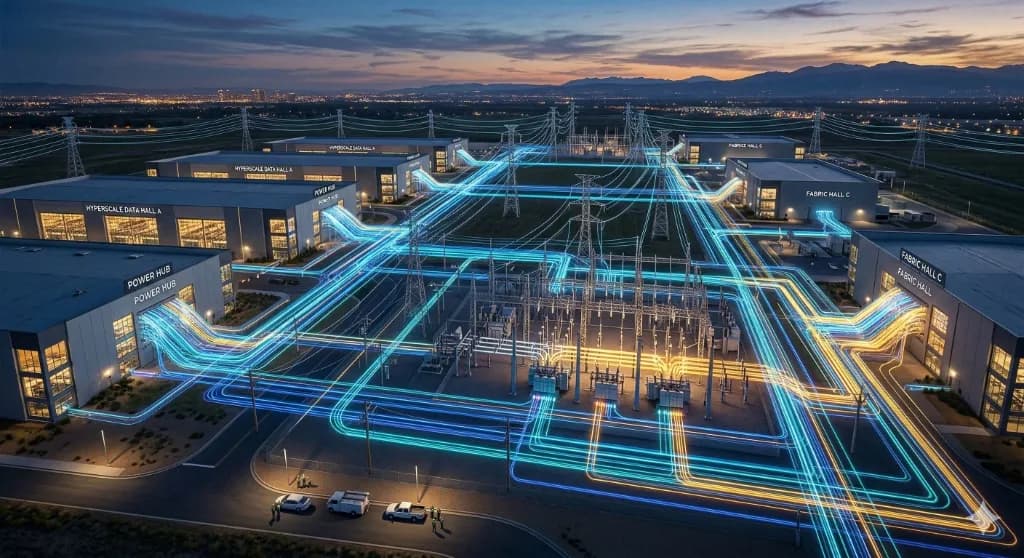
Modern energy grids represent the foundational leverage of the new economy.
A colossal amount of leverage and resources is currently flowing out of legacy industries and directly into the foundation of the AI era. Protecting your future isn't just about updating your resume. It is about recognizing where the global tides are shifting and ensuring you are positioned to capture the upside of that growth, rather than just paddling against the current. You have to move your mindset from just providing daily labor to securing long-term leverage.
3. Re-evaluate Your Safe Bets
This is the hardest pill to swallow for high-achieving earners. You have probably done everything you were supposed to do. You work hard, you have long-term planning, and you contribute to a standard safety net or long-term plan. You are playing by the traditional rules.
But what happens when the rules of the entire economy change overnight?
Many of our traditional safety nets were built for an economy that is actively being dismantled. If your long-term security is heavily reliant on legacy industries that AI is currently making obsolete, your safe bet might actually be incredibly exposed. This isn't meant to scare you. It is meant to wake you up. The traditional advice of set-it-and-forget-it was built for a slow-moving world. Today, true readiness means taking a hard look at the financial wall you have built around your family and asking if it is built on the industries of the past, or the infrastructure of the future.
You don't need to be a Silicon Valley insider to secure your position. You just need a baseline understanding of where the world is heading so you can make the right pivot before the window closes.
The Bottom Line: Where Do You Stand?
The anxiety you are feeling about AI is completely valid. The ground is shifting, and it is going to impact everything from our daily workflows to our long-term stability. Doing nothing and hoping for the best is the riskiest move you can make right now. You cannot build a roadmap if you don't know your starting point.
That is exactly why we built the AI Readiness Assessment. It is a fast, free tool designed for everyday earners to cut through the tech jargon and figure out exactly how exposed they are to the AI transition, both monetarily and structurally. In just a few minutes, you will get a clear picture of your current standing and actionable steps on how to position yourself safely for the massive shift ahead. Don't wait until the new economy leaves you behind.